Friday, March 3, 2017

Curly haircuts and why I don’t get my curly hair cut dry

Hair Romance - Curly Haircuts - Why I don't get my curly hair cut dry

Let's talk about curly haircuts – one of my most frequently asked questions. Today I want to chat to you about why I don't get my curly hair cut dry and if that's right for you.

Curly hair is very different to straight hair and needs to be treated differently. Not only do you wash it differently, but curly hair needs a different kind of haircut.

Curly hair experts will say you need your curls cut when they're dry, and for many good reasons. Dry haircuts probably need an entire post on their own, but today I wanted to explain why I prefer to get my hair cut when it's wet.

You can read more below and watch my video to see my explanations.

Why I don't get my curly hair cut dry

Click here if you can't see the video

1. Dry haircuts (by their nature) are uneven

Every curl springs up differently and any curly girl will know how much curly hair length changes as it dries.

Shrinkage is real!

Shrinkage is what you call the difference between the length of your hair when it's wet and pulled straight compared to when it's dry. For some curly girls that can be a huge, huge difference.

In my hair, the shrinkage works out to be around 10cm. I have a very mixed curl pattern on my head. Underneath I have very tight ringlets and on the top I have looser waves.

Dry cuts account for the shrinkage and are shaped as your hair sits naturally. In my hair, this would mean big differences in length across my head.

It's not a major issue when you're wearing your hair curly all the time, but this does cause problems for me. And that leads me on to reason two…

2. I wear my hair straight from time to time

For me hair is fun, and I love the versatility of being able to style my hair in different ways.

Plus my job is to create hairstyles for Hair Romance, so I need a variety of looks in my hair. If I tried to straighten my hair after it has been cut dry then my hair would look a mess. It pretty much looks like I took a pair of scissors to my hair. (And actually this is what a lot of curly girls do; they cut their hair curl by curl with scissors.)

If you never wear your hair straight, this won't be a problem for you. But if you like a bit of variety, then this is something to consider.

Hair Romance - Curly Haircuts - Why I don't get my curly hair cut dry

3. My curls change

I seem to have very fluid curl patterns and my hair changes all the time. Sometimes I'll do the exact same routine and get a completely different curl result.

My curls also change over time. If you compare photos of my curls from two years ago to now, they look completely different.

My hair may not change in a month, so I could probably still get away with the unevenness of a dry hair cut, but I prefer having a straighter haircut. This gives my curls space to change when they want and my haircut will still be fairly even.

Hair Romance - Curly Haircuts - Why I don't get my curly hair cut dry

Do you get your hair cut wet or dry, and why? Do your curls change? And do you like to wear your hair straight sometimes too?

The post Curly haircuts and why I don't get my curly hair cut dry appeared first on Hair Romance.


from Hair Romance http://ift.tt/2mMF7J5

Curly haircuts and why I don’t get my curly hair cut dry

Hair Romance - Curly Haircuts - Why I don't get my curly hair cut dry

Let’s talk about curly haircuts – one of my most frequently asked questions. Today I want to chat to you about why I don’t get my curly hair cut dry and if that’s right for you.

Curly hair is very different to straight hair and needs to be treated differently. Not only do you wash it differently, but curly hair needs a different kind of haircut.

Curly hair experts will say you need your curls cut when they’re dry, and for many good reasons. Dry haircuts probably need an entire post on their own, but today I wanted to explain why I prefer to get my hair cut when it’s wet.

You can read more below and watch my video to see my explanations.

Why I don’t get my curly hair cut dry

Click here if you can’t see the video

1. Dry haircuts (by their nature) are uneven

Every curl springs up differently and any curly girl will know how much curly hair length changes as it dries.

Shrinkage is real!

Shrinkage is what you call the difference between the length of your hair when it’s wet and pulled straight compared to when it’s dry. For some curly girls that can be a huge, huge difference.

In my hair, the shrinkage works out to be around 10cm. I have a very mixed curl pattern on my head. Underneath I have very tight ringlets and on the top I have looser waves.

Dry cuts account for the shrinkage and are shaped as your hair sits naturally. In my hair, this would mean big differences in length across my head.

It’s not a major issue when you’re wearing your hair curly all the time, but this does cause problems for me. And that leads me on to reason two…

2. I wear my hair straight from time to time

For me hair is fun, and I love the versatility of being able to style my hair in different ways.

Plus my job is to create hairstyles for Hair Romance, so I need a variety of looks in my hair. If I tried to straighten my hair after it has been cut dry then my hair would look a mess. It pretty much looks like I took a pair of scissors to my hair. (And actually this is what a lot of curly girls do; they cut their hair curl by curl with scissors.)

If you never wear your hair straight, this won’t be a problem for you. But if you like a bit of variety, then this is something to consider.

Hair Romance - Curly Haircuts - Why I don't get my curly hair cut dry

3. My curls change

I seem to have very fluid curl patterns and my hair changes all the time. Sometimes I’ll do the exact same routine and get a completely different curl result.

My curls also change over time. If you compare photos of my curls from two years ago to now, they look completely different.

My hair may not change in a month, so I could probably still get away with the unevenness of a dry hair cut, but I prefer having a straighter haircut. This gives my curls space to change when they want and my haircut will still be fairly even.

Hair Romance - Curly Haircuts - Why I don't get my curly hair cut dry

Do you get your hair cut wet or dry, and why? Do your curls change? And do you like to wear your hair straight sometimes too?

The post Curly haircuts and why I don’t get my curly hair cut dry appeared first on Hair Romance.


from Hair Romance http://ift.tt/2mMF7J5

Thursday, March 2, 2017

Therm-a-Rest Backcountry Quilt 15 Review

Sierra Designs 15 Degree Backcountry Quilt

The Sierra Designs Backcountry Quilt 15 is a down quilt rated to 15 degrees that combines all the advantages of an ultralight down quilt with a hood, ideal in colder weather when you need extra thermal protection for your head. The unique hideaway hood on this Sierra Designs Quilt is magnificent in the cool weather that this quilt is rated for, regardless if you sleep on the ground in a tent or in a hammock.

The hood doesn't prevent you from sleeping on your side or in a hammock like a traditional mummy bag and I wish more manufacturers would offer it as an option since it works so well, especially in a hammock in cooler weather since the back of the hood cradles your head like a puffy, warm down pillow. I stumbled on using Sierra Designs Backcountry Quilts in hammocks quite by accident two years ago and think they make a great insulation system in cooler weather when more head and neck insulation is required. (See my post on Hammock Forums.)

The hood is there when you need it, but folds away into the chest when you
The hood is there when you need it, but folds away into the chest when you don't.

The Backcountry Quilt 15 is cut wide (58″) and very long (80″) compared to other lightweight backpacking quilts, something to be aware of when sizing one and making weight comparisons with other products. It also doesn't come with any straps to keep it attached to a sleeping pad, which can be useful if you sleep on the ground and toss and turn at night. On the flip side, the width does allow you to pull the quilt underneath your sides, minimizing the need for straps, which are easy to misplace in my experience. Furthermore, you don't want sleeping pad straps when sleeping in a hammock.

The foot box is closed to prevent drafts and comes up to the knee (approximately.) The quilt taper is generous (42″) and should be wide enough to fit most mummy style, inflatable sleeping pads.

  • Temperature Rating: 15 degrees F / -9.4 degrees C
  • EN Lower Limit: 17 degrees F / -8.0 degrees C
  • EN Comfort Limit: 28 degrees F / -2.0 degrees C
  • Size: Fits to 6′ 4″ / 193 cm
  • Length: 80″ / 203 cm
  • Shoulder Width: 58″ / 147 cm
  • Hip: 58″ / 147 cm
  • Foot: 42″ / 107 cm
  • Fill Weight 17.85 ounces / 0.51 kg
  • Trail Weight: 1 pound 15 ounces / 0.89kg
  • Insulation: 700 Fill Duck DriDown
  • Shell Material: 20D Nylon Ripstop
  • Liner Material: 20 D Nylon Ripstop

The other thing that's great about the Backcountry Quilt is that it's rated using the EN13537 sleeping bag temperature rating standard, so you know how warm it is compared to other rated sleeping bag options, a useful comparison if you're interested in converting from a sleeping bag to a quilt-based sleep system. Note: When buying a quilt made by cottage gear manufacturers, conventional wisdom suggests buying a quilt that's an extra 10 degrees warmer than you expect to make up for any exaggeration in the vendor temperature rating.  With the exception of the Sierra Designs Backcountry Quilt, most quilts can't be tested using the sleeping bag standard, which requires an integrated hood as part of the test. 

Assessment

The Sierra Designs Backcountry Quilt 15 is a good sleep insulation option if you're a side sleeper and hate the confinement of a mummy-style hood or you want a quilt that can be used for sleeping in a hammock and on the ground in a tent. Weighing 31 ounces (1 pound 15 ounces), it's lighter weight than many high-quality 20 degree down sleeping bags. With an MSRP of $249.95, it is comparatively expensive and heavier compared to a custom-made quilt (minus the insulated hood), but becomes more price competitive if you can get it on sale.

Disclosure: Sierra Designs provided the author with a sample quilt for this review. 

Support SectionHiker.com. If you make a purchase after clicking on the links above, a portion of the sale helps support this site at no additional cost to you.

See Also:


from Section Hikers Backpacking Blog http://ift.tt/2m21Kte

Therm-a-Rest Backcountry Quilt 15 Review

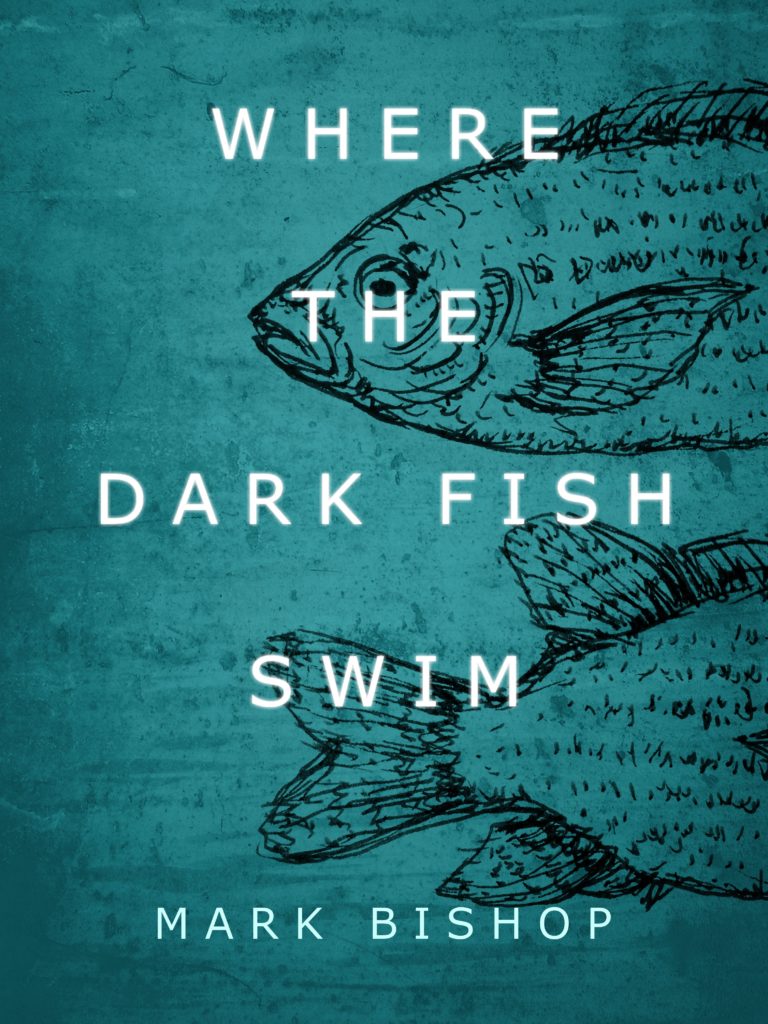
IndieView with Mark Bishop, author of Where the Dark Fish Swim

Someone I know asked me a great question when we were talking about it all. He asked if I wanted to make money out of it or for people to read my work. 

Mark Bishop – 2 March 2017

The Back Flap

Where the dark fish swim is a letter from Michael, a deeply troubled father, to his estranged son, Huck, written as they travel together toward the end of a journey Michael set out on to make peace with his past.

Michael tells Huck of the six people who mattered most to him in his life and how, in turn, he has gone to visit each of them. He also begins to explain why he abandoned Huck and his mother and why, very soon, he will need to do it again.

And, of course, he tells Huck of the dark fish.

About the book

When did you start writing the book?

My wife and I were trying for a baby for about five years. During that time, we had some difficult challenges and I decided it would be helpful and therapeutic to channel some of my thoughts and feelings in a creative way. So I decided to start writing this novel, which was something I'd wanted to do for a while.  Whilst the book does not directly reflect anything that has actually happened to me, many of my thoughts and feelings during that difficult time come out in the story.

As I was having the edits completed on our book our son arrived and the book was published just after and so it is a fitting end to our own journey.

How long did it take you to write it?

About two years, on and off. I have a full time job and was writing in the evenings mostly. I wrote the bulk of the work in about two months as I wanted the book to feel "pacey" as it is meant to have been written in a few days.

The rest of the time was mainly editing and re-writing.

Where did you get the idea from?

I think it's just one of those things I always had bubbling away in the back of my mind. I had had the outline of the story for years but never gotten around to writing it down.

Were there any parts of the book where you struggled?

This was my first time writing a novel and I found myself wanting to go back over every line rather than progressing with the story. That was challenging at first but once I got into the flow of it I found the writing much easier. It was interesting then how little I had to change the later parts of the book as they were written more fluidly.

What came easily?

Writing in the voice of my main character. Whilst it isn't an autobiographical piece, I just found a huge connection with my main character and found it easy to write like him. Maybe there is some of me in there!

Are your characters entirely fictitious or have you borrowed from real world people you know?

Virtually entirely fictional.  Nothing that happens to the central characters has happened to me. There are snippets of minor detail that are from my life – places, small events, feelings etc – but the vast majority is just made up.

We all know how important it is for writers to read. Are there any particular authors that have influenced how you write and, if so, how have they influenced you?

I read a lot and particularly love classic twentieth century authors – Steinbeck, Hemmingway, Orwell, Fitzgerald etc. I don't want to say any of them influenced me because that might make people think I believe I can write as well as they can…. which I can't. However, I think there is definitely a Steinbeck-esque tone to the writing and he is probably both my favorite author and biggest influence. So you can read into that anything you like.

Do you have a target reader?

Anyone who has lost and then found something important to them. Ultimately it's what the book is about and reflects my own journey.

About Writing

Do you have a writing process? If so can you please describe it?

I've learnt my best way is to get through the story as quickly as possible and then go back and re-read it completely a few times. Then edit paragraph by paragraph.

Do you outline? If so, do you do so extensively or just chapter headings and a couple of sentences?

I outlined the whole story in chapter form with a few heading and sentences for each and then just wrote the whole thing beginning to end.

Do you edit as you go or wait until you've finished?

I began editing as I was going but it didn't really work for me so I stopped and waited until I had finished.

Did you hire a professional editor?

Yes, and they were really helpful. They gave me some great challenge on structure, which made the story better, and some helpful tips on self-editing bits. I also had a few friends and family read it before I launched it, which also helped.

Do you listen to music while you write? If yes, what gets the fingers tapping?

Weirdly I really got into Bob Dylan while I was writing it but had never been into him before. I think some of his music really chimed with my emotions.

About Publishing

Did you submit your work to Agents?

Yes, but not that many. I did a few initially and then started getting virtually exactly the same feedback so I submitted to a limited number of others and then stopped.

What made you decide to go Indie, whether self-publishing or with an indie publisher? Was it a particular event or a gradual process?

Someone I know asked me a great question when we were talking about it all. He asked if I wanted to make money out of it or for people to read my work. I said I just wanted some people to read it and he told me the best way to do that was to self-publish and then move on to the next thing. Getting it out there was more important in his view and I think he was right.

Did you get your book cover professionally done or did you do it yourself?

I got I professionally done. I'm not that artistic!

Do you have a marketing plan for the book or are you just winging it?

I have a plan… but not the contacts. So I'm winging it.

Any advice that you would like to give to other newbies considering becoming Indie authors?

You probably get this all the time, but just go for it. The worst anyone can do is say they didn't like your work and that's just their opinion.

About You

Where did you grow up?

A small market town called Witney in the Cotswolds, UK.

Where do you live now?

In the same town, although via University and California.

What would you like readers to know about you?

Firstly, this is my debut novel and I'd like people to be honest in what they think about it. Friends and family comments are nice, but always a little biased.

Secondly, I poured my heart and soul into this and I'm really proud of. So I'd love people to give it a chance.

What are you working on now?

A follow up. A very different story but equally centered around "loss".

End of Interview:

For more like Mark's Facebook page.

Get your copy of Where the Dark Fish Swim from Amazon US or Amazon UK.


from The IndieView http://ift.tt/2lZQFJl

IndieView with Mark Bishop, author of Where the Dark Fish Swim

Someone I know asked me a great question when we were talking about it all. He asked if I wanted to make money out of it or for people to read my work. 

Mark Bishop – 2 March 2017

The Back Flap

Where the dark fish swim is a letter from Michael, a deeply troubled father, to his estranged son, Huck, written as they travel together toward the end of a journey Michael set out on to make peace with his past.

Michael tells Huck of the six people who mattered most to him in his life and how, in turn, he has gone to visit each of them. He also begins to explain why he abandoned Huck and his mother and why, very soon, he will need to do it again.

And, of course, he tells Huck of the dark fish.

About the book

When did you start writing the book?

My wife and I were trying for a baby for about five years. During that time, we had some difficult challenges and I decided it would be helpful and therapeutic to channel some of my thoughts and feelings in a creative way. So I decided to start writing this novel, which was something I’d wanted to do for a while.  Whilst the book does not directly reflect anything that has actually happened to me, many of my thoughts and feelings during that difficult time come out in the story.

As I was having the edits completed on our book our son arrived and the book was published just after and so it is a fitting end to our own journey.

How long did it take you to write it?

About two years, on and off. I have a full time job and was writing in the evenings mostly. I wrote the bulk of the work in about two months as I wanted the book to feel “pacey” as it is meant to have been written in a few days.

The rest of the time was mainly editing and re-writing.

Where did you get the idea from?

I think it’s just one of those things I always had bubbling away in the back of my mind. I had had the outline of the story for years but never gotten around to writing it down.

Were there any parts of the book where you struggled?

This was my first time writing a novel and I found myself wanting to go back over every line rather than progressing with the story. That was challenging at first but once I got into the flow of it I found the writing much easier. It was interesting then how little I had to change the later parts of the book as they were written more fluidly.

What came easily?

Writing in the voice of my main character. Whilst it isn’t an autobiographical piece, I just found a huge connection with my main character and found it easy to write like him. Maybe there is some of me in there!

Are your characters entirely fictitious or have you borrowed from real world people you know?

Virtually entirely fictional.  Nothing that happens to the central characters has happened to me. There are snippets of minor detail that are from my life – places, small events, feelings etc – but the vast majority is just made up.

We all know how important it is for writers to read. Are there any particular authors that have influenced how you write and, if so, how have they influenced you?

I read a lot and particularly love classic twentieth century authors – Steinbeck, Hemmingway, Orwell, Fitzgerald etc. I don’t want to say any of them influenced me because that might make people think I believe I can write as well as they can…. which I can’t. However, I think there is definitely a Steinbeck-esque tone to the writing and he is probably both my favorite author and biggest influence. So you can read into that anything you like.

Do you have a target reader?

Anyone who has lost and then found something important to them. Ultimately it’s what the book is about and reflects my own journey.

About Writing

Do you have a writing process? If so can you please describe it?

I’ve learnt my best way is to get through the story as quickly as possible and then go back and re-read it completely a few times. Then edit paragraph by paragraph.

Do you outline? If so, do you do so extensively or just chapter headings and a couple of sentences?

I outlined the whole story in chapter form with a few heading and sentences for each and then just wrote the whole thing beginning to end.

Do you edit as you go or wait until you’ve finished?

I began editing as I was going but it didn’t really work for me so I stopped and waited until I had finished.

Did you hire a professional editor?

Yes, and they were really helpful. They gave me some great challenge on structure, which made the story better, and some helpful tips on self-editing bits. I also had a few friends and family read it before I launched it, which also helped.

Do you listen to music while you write? If yes, what gets the fingers tapping?

Weirdly I really got into Bob Dylan while I was writing it but had never been into him before. I think some of his music really chimed with my emotions.

About Publishing

Did you submit your work to Agents?

Yes, but not that many. I did a few initially and then started getting virtually exactly the same feedback so I submitted to a limited number of others and then stopped.

What made you decide to go Indie, whether self-publishing or with an indie publisher? Was it a particular event or a gradual process?

Someone I know asked me a great question when we were talking about it all. He asked if I wanted to make money out of it or for people to read my work. I said I just wanted some people to read it and he told me the best way to do that was to self-publish and then move on to the next thing. Getting it out there was more important in his view and I think he was right.

Did you get your book cover professionally done or did you do it yourself?

I got I professionally done. I’m not that artistic!

Do you have a marketing plan for the book or are you just winging it?

I have a plan… but not the contacts. So I’m winging it.

Any advice that you would like to give to other newbies considering becoming Indie authors?

You probably get this all the time, but just go for it. The worst anyone can do is say they didn’t like your work and that’s just their opinion.

About You

Where did you grow up?

A small market town called Witney in the Cotswolds, UK.

Where do you live now?

In the same town, although via University and California.

What would you like readers to know about you?

Firstly, this is my debut novel and I’d like people to be honest in what they think about it. Friends and family comments are nice, but always a little biased.

Secondly, I poured my heart and soul into this and I’m really proud of. So I’d love people to give it a chance.

What are you working on now?

A follow up. A very different story but equally centered around “loss”.

End of Interview:

For more like Mark’s Facebook page.

Get your copy of Where the Dark Fish Swim from Amazon US or Amazon UK.


from The IndieView http://ift.tt/2lZQFJl

Wednesday, March 1, 2017

Winter Attempt to Mount Whiteface and East Sleeper

The Downes Brook Trail requires nine stream crossings and is not for the faint of heart in winter on a warm day
The Downes Brook Trail requires ten stream crossings across snow bridges in winter.

Climbing Mt Whiteface and its neighbor East Sleeper via the Downes Brook Trail is not your typical winter route. Running 5.2 miles and requiring 10 stream crossings to the Sleeper Trail junction linking Whiteface to East Sleeper, it would have been a long approach had we made it. But we didn't.

Why didn't we? Well that's a different story. Some people in the group I was with were tired from breaking trail unsuccessfully up Mt Jefferson, the previous day. Others were intimidated by the fact that we'd lost the trail, buried under several feet of snow, even though we were following a handrail (the stream…up a ravine) to our destination. Some were justifiably worried about the snow bridges we'd crossed and whether they'd be passable later that evening in the balmy temperatures. Others were just gassed, breaking trail at a one mile per hour pace through deep snow.

I wanted to keep going. I knew where we were relative to our trail and our destination. I had plenty of energy left. I knew we could bushwhack around any of the snow bridges if they didn't hold. But I turned back with the group because that's how winter hiking works. I couldn't finish the hike without them and you don't split a group. Disappointing, but it will inform our next attempt.

Total distance hiked: 8.0 miles with 1200′ of elevation gain.

Downes Brook Trail to Mt Whiteface and East Sleeper Attempt (Click for Geospatial PDF)


from Section Hikers Backpacking Blog http://ift.tt/2lW9crf